More importantly, inconsistent kneading can affect gluten development, dough texture, and the quality
of the finished product.For businesses moving into medium- or high-volume production, a professional
bakery dough kneading machine such as the HX50T 63L Commercial Dough Mixer
can help simplify the preparation process and provide more consistent results.
Why Is a Commercial Dough Mixer Important?
Dough mixing is more than simply combining flour and water.
During kneading, the ingredients must be thoroughly incorporated while the dough gradually develops
the structure required for bread, pizza, buns, pastries, and other bakery products.
In a commercial environment, operators may need to prepare multiple batches every day. A dedicated
dough mixer helps reduce manual work and allows bakery staff to focus on shaping, proofing, baking,
and other production tasks.
For bakeries with increasing production requirements, investing in a larger-capacity mixer can also
reduce the number of batches required during a working day.
Key HX50T Buying Points
63L bowl with up to 25 kg flour capacity for larger commercial batches.
10 variable speeds with a spiral speed range of approximately 87–254 RPM.
Head-lifting design and removable bowl improve access for transfer and cleaning.
Digital controls, emergency stop, and bowl guard sensor support repeatable operation and safer use.
1. Choose the Right Bowl Capacity
The first factor to consider when selecting a commercial dough mixer is capacity.
A mixer that is too small may require operators to prepare many batches, while an oversized machine
may take up unnecessary kitchen space.
The HX50T features a 63-liter mixing bowl and can handle up to 25 kg of flour per batch,
making it suitable for businesses that need to prepare relatively large quantities of dough at one time.
This capacity can be particularly useful for:
- Commercial bakeries
- Pizza shops
- Bread production kitchens
- Hotels
- Restaurants
- Catering kitchens
- Central food preparation facilities
When choosing your mixer size, consider not only your current production volume but also whether your
business is likely to expand in the future.
2. Pay Attention to Mixing Speed
Different stages of dough preparation may benefit from different mixing speeds.
A slower speed is useful when initially combining flour, water, yeast, and other ingredients because
it helps reduce flour splashing. Once the ingredients are incorporated, a higher speed can be used
during further kneading.
The HX50T provides 10 variable speed settings with spiral speeds ranging from approximately
87 to 254 RPM.
This gives operators greater control over the mixing process when working with different dough formulas.
For a bakery producing several products—such as bread in the morning and pizza dough later in the day—
adjustable speed can make one mixer more versatile.
3. Look for Convenient Bowl Access
Cleaning and dough transfer are important considerations that are sometimes overlooked when purchasing bakery equipment.
After mixing, operators need to remove the dough efficiently and prepare the mixer for the next batch.
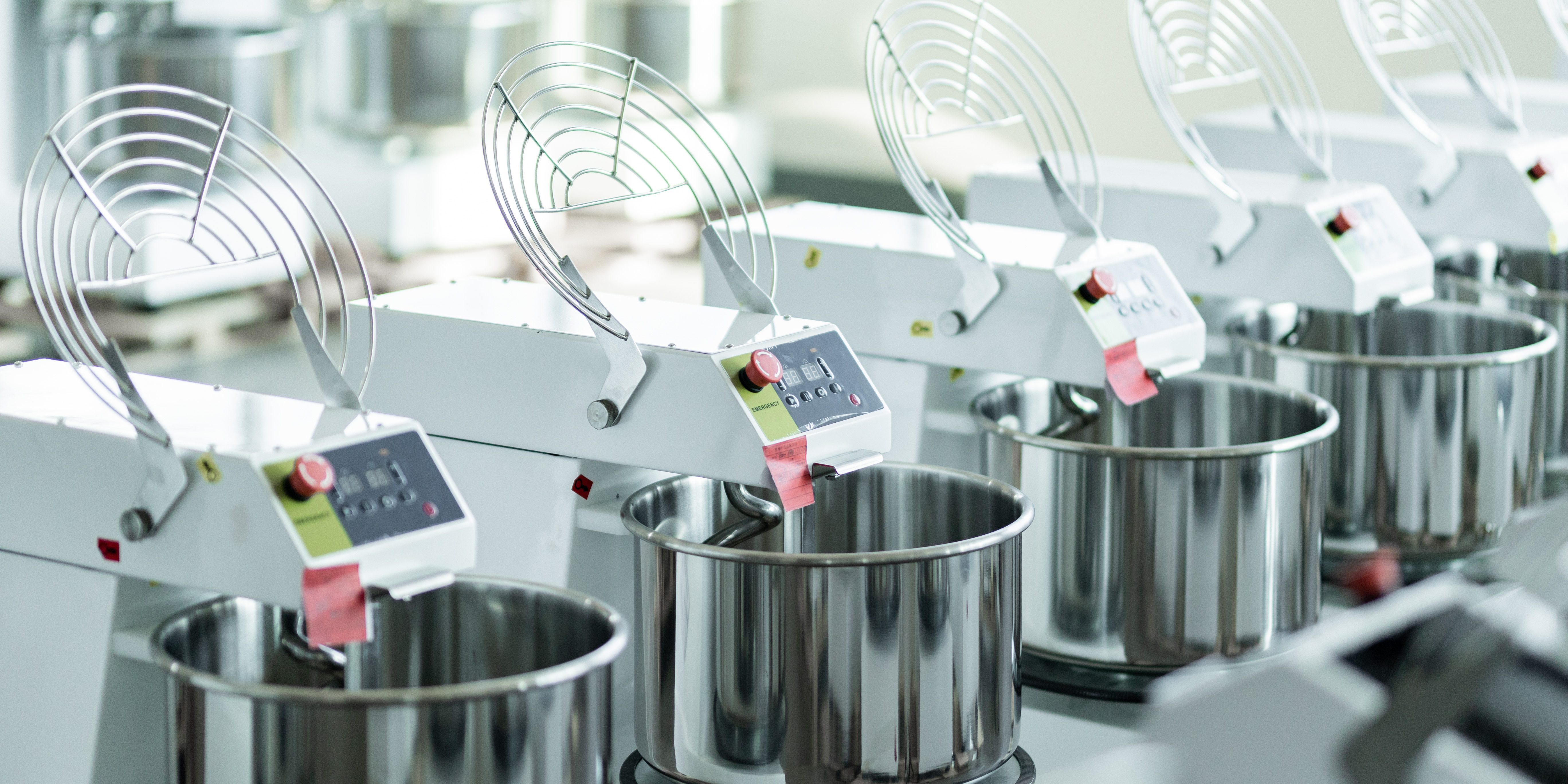
The HX50T uses a head-lifting design that provides direct access to its 63L bowl, while the bowl
can be removed from the machine for cleaning or ingredient transfer.
This design can make daily operation more convenient, particularly in commercial kitchens where equipment needs to be cleaned frequently.
Easy bowl access also helps when transferring prepared dough into proofing containers or onto a worktable for dividing and shaping.

Workflow Feature
Direct bowl access for cleaning and dough transfer
The lifted-head configuration exposes the spiral and bowl area, while the stainless steel bowl can be removed from the machine. This supports the article’s emphasis on easier cleaning, ingredient transfer, and day-to-day bakery workflow.
4. Consider Motor Power for Heavy Dough
Bread and pizza dough can place significant resistance on a mixer, especially when working with larger
batches or relatively dense formulations.
For this reason, motor power and transmission design are important when selecting a commercial mixer.
The HX50T is equipped with a 1800W motor and chain transmission system designed for
commercial dough preparation.
The machine is intended for dough applications including bread, pizza, and pastry production.
For bakery owners, choosing equipment designed specifically for dough preparation is important because
dough places very different demands on a machine compared with lighter ingredients such as cream, eggs,
or cake batter.
5. Digital Controls Make Batch Management Easier
Consistency is essential in commercial baking.
When customers purchase the same bread, pizza, or pastry repeatedly, they expect similar quality each time.
Controlling mixing time and speed helps operators reproduce the same production process from one batch to another.
The HX50T includes a digital control panel that displays operating time and speed settings,
allowing operators to monitor the kneading process more easily.
Instead of relying entirely on manual observation, bakery staff can establish standard operating procedures
for specific dough recipes.
For example, a bakery can record the mixing time and speed settings used for a particular bread formula and repeat those settings during subsequent production.
6. Don’t Ignore Safety Features
Commercial mixers contain powerful moving components, so safety should always be considered when evaluating bakery equipment.
The HX50T includes an emergency stop button and bowl guard sensor. According to the manufacturer, opening the guard stops motor operation to help protect the operator during use.
Operators should still be properly trained and should always follow the manufacturer’s operating and cleaning instructions.
Safety guards should never be removed or bypassed during operation.
Buying Considerations Before You Order
Before purchasing, match the machine to the actual production environment rather than choosing by capacity alone.
Confirm your typical flour quantity, dough formulation, and expected number of batches per day.
Confirm whether your site requires 220V/50Hz or 110V/60Hz before ordering.
Check the 999 × 560 × 777 mm machine footprint and leave room for bowl removal and cleaning.
What Can You Make With a Commercial Dough Mixer?
A commercial kneading machine can support a wide range of bakery and food-service applications.
Depending on the recipe and production requirements, it can be used for preparing dough for:
Bread
From sandwich loaves to artisan-style breads, consistent kneading helps standardize production when preparing repeated batches.
Pizza
Pizzerias may prepare significant quantities of dough every day before dividing, rounding, proofing, and refrigeration.
Buns and Rolls
Burger buns, dinner rolls, and other yeast-raised products often require repeated dough preparation in larger production environments.
Pastry Dough
A variable-speed mixer provides greater flexibility when a bakery produces multiple categories of products and recipes.
HX50T 63L Commercial Dough Mixer Specifications
The main specifications of the HX50T are:
| Specification | HX50T |
|---|---|
| Model | HX50T |
| Mixer Type | Head Lifting |
| Bowl Capacity | 63 L |
| Maximum Flour Capacity | 25 kg |
| Power | 1800 W |
| Voltage | 220V/50Hz or 110V/60Hz |
| Spiral Speed | 87–254 RPM |
| Speed Settings | 10 |
| Transmission | Chain |
| Machine Dimensions | 999 × 560 × 777 mm |
| Machine Weight | 141 kg |
construction, the HX50T is positioned for professional kitchens that regularly prepare substantial batches of dough.
Who Is the HX50T Suitable For?
The HX50T can be a suitable option for businesses that have moved beyond small countertop mixers but do not require a fully automated industrial dough production line.
It is particularly relevant for bakeries and food-service operations looking for:
- Larger batch capacity
- Multiple mixing speeds
- Easier bowl removal
- Digital operation controls
- A floor-standing commercial design
- Equipment dedicated to regular dough production
Before purchasing, buyers should determine their typical batch size, dough type, available electrical supply,
workspace dimensions, and expected daily production volume.
Final Thoughts
Choosing the right commercial dough mixer for a bakery is ultimately about matching the machine
to your production requirements.
Capacity determines how much dough you can prepare at once. Speed control provides greater flexibility for different recipes. Bowl accessibility affects daily cleaning and workflow, while motor and transmission design become increasingly important when processing heavy dough regularly.
For medium- to high-volume bakery operations, the HX50T 63L Bakery Dough Kneading Machine
combines a 63-liter bowl, up to 25 kg flour capacity, 10 variable speeds, digital controls, and a removable bowl design in one commercial unit.
Whether you operate a bakery, pizzeria, hotel kitchen, restaurant, or food-production facility, selecting a
mixer that matches your actual production volume can help create a smoother and more standardized dough preparation workflow.
Looking for a commercial dough mixer?
Contact Twothousand Machinery for more information about the HX50T 63L Dough Kneading Machine,
specifications, voltage options, pricing, and shipping.