
Introduction: Dough Press vs Hand Tossed Pizza
When it comes to pizza dough preparation, there is an ongoing debate between using a dough press or hand tossing the dough. Both methods have their own unique characteristics and advantages. In this article, we will explore the difference between a dough press and hand-tossed pizza, the pros and cons of each method, and the factors to consider when choosing between them.
Difference Between Dough Press and Hand-Tossed Pizza
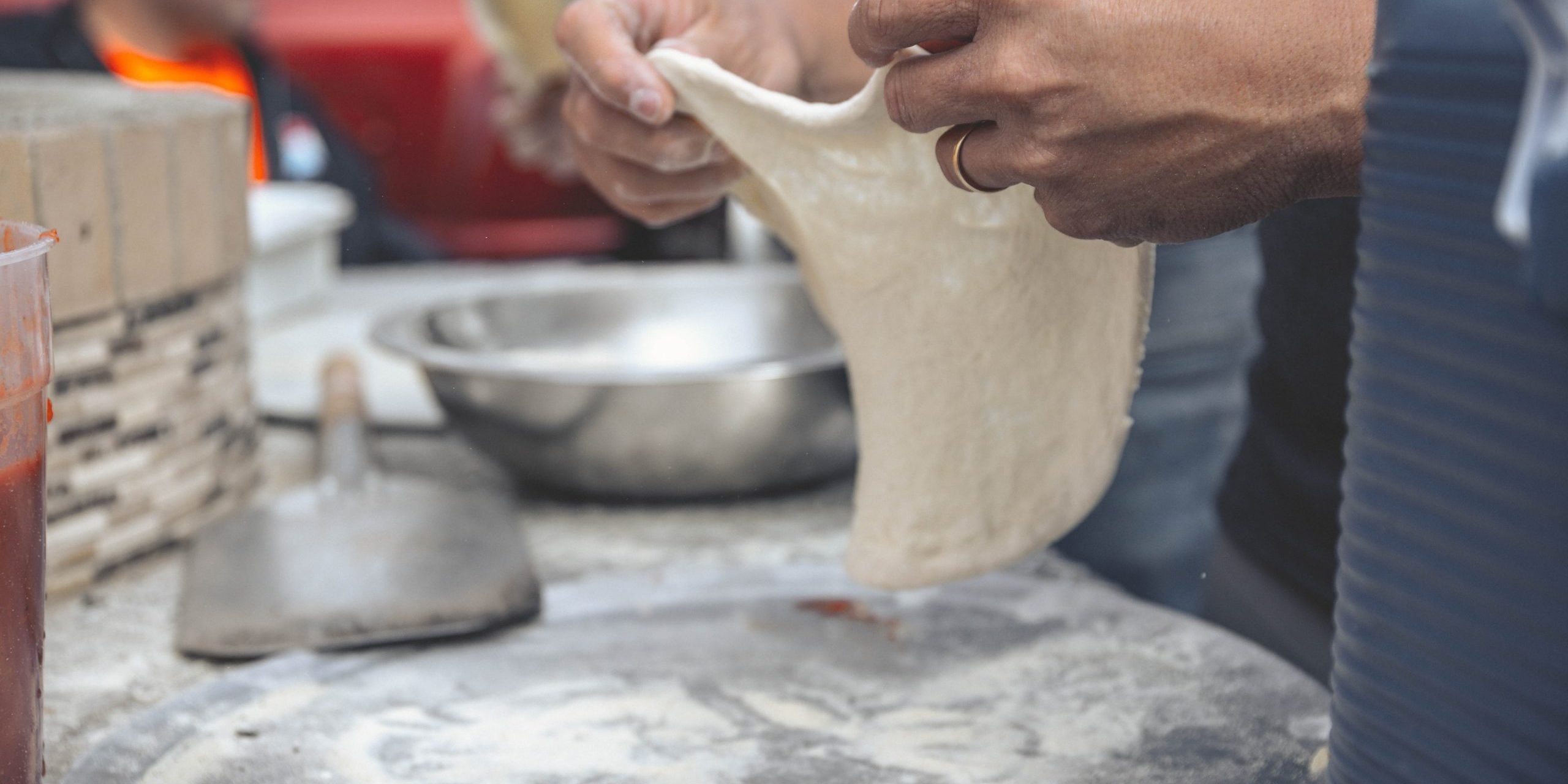
A dough press is a machine that involves pressing the dough between two metal plates, resulting in a more uniform dough. This method offers consistency and efficiency, which can be beneficial in high-volume settings. On the other hand, hand-tossing pizza dough is a traditional method that requires skill and creates an authentic feel. It involves stretching and spinning the dough in the air to create a round shape.
According to Pizza Today, machine-rolled dough cannot achieve the same chewiness and crispness as hand-tossed dough. Machine-rolled dough undergoes extensive degassing, resulting in thinner and denser dough. However, partially opening the dough with a machine roller/sheeter and finishing it by hand can replicate the characteristics of hand-tossed dough, allowing for a crust with the desired texture and chewiness.
Pros and Cons of Using a Dough Press
Using a dough press offers several benefits. Pizza presses provide uniformity, speed, efficiency, and ease of use compared to hand-tossing. They can be customized to create different pizza styles, allowing for versatility in menu offerings. Investing in a pizza press can improve consistency and productivity in a restaurant, as mentioned in the summary from Pro Restaurant Equipment.
However, there are also drawbacks to using a dough press. Machine-pressed dough may lack the artisanal touch and irregularities of hand-tossed dough, which some customers may prefer. Additionally, the use of a dough press requires an initial investment in the equipment, which may not be feasible for all businesses.
Pros and Cons of Hand-Tossing Pizza Dough
Hand-tossing pizza dough has its own advantages. It creates a unique round shape and larger holes in the crust, as mentioned in the summary from Pizzeria Locale. The hand-tossed dough has a lighter, airy texture and a tender chew, which can contribute to a more enjoyable eating experience for some customers.
However, hand-tossing pizza dough also has its disadvantages. It requires skill and practice to achieve consistent results, which may be challenging for less experienced pizza makers. Furthermore, the process of hand tossing can be physically demanding for employees, especially during busy periods.
Factors to Consider When Choosing Between a Dough Press and Hand Tossing
Several factors should be considered when deciding between a dough press and hand tossing. The desired crust characteristics play a significant role. Hand tossing can create a crust with larger holes and a unique texture, while a dough press offers uniformity. The efficiency and speed of the method are also important considerations. A dough press can save time and effort in high-volume settings, while hand tossing may be preferred for smaller-scale operations. Consistency is another factor to consider. A dough press can ensure consistent results, while hand tossing may lead to slight variations in crust thickness and shape.
Conclusion: Choosing the Right Technique for Your Pizza Dough
In conclusion, the choice between a dough press and hand tossing depends on several factors, including desired crust characteristics, efficiency, and consistency. A dough press offers uniformity, speed, and efficiency, but may lack the artisanal touch of hand-tossed dough. Hand tossing creates a unique texture and shape, but requires skill and practice. It is important for pizza makers to consider their specific needs and preferences when deciding which method to use, as there is no one-size-fits-all approach to pizza dough preparation.