Description
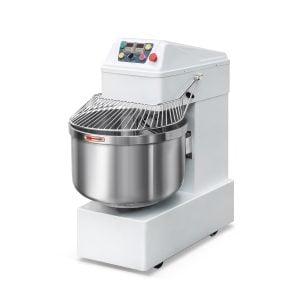
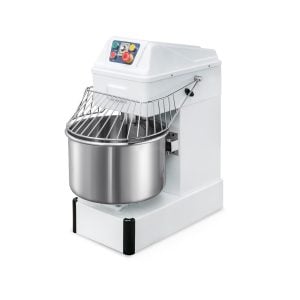
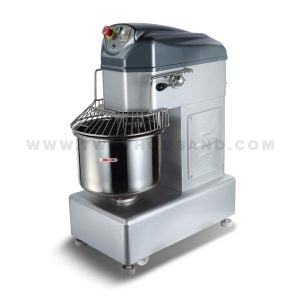
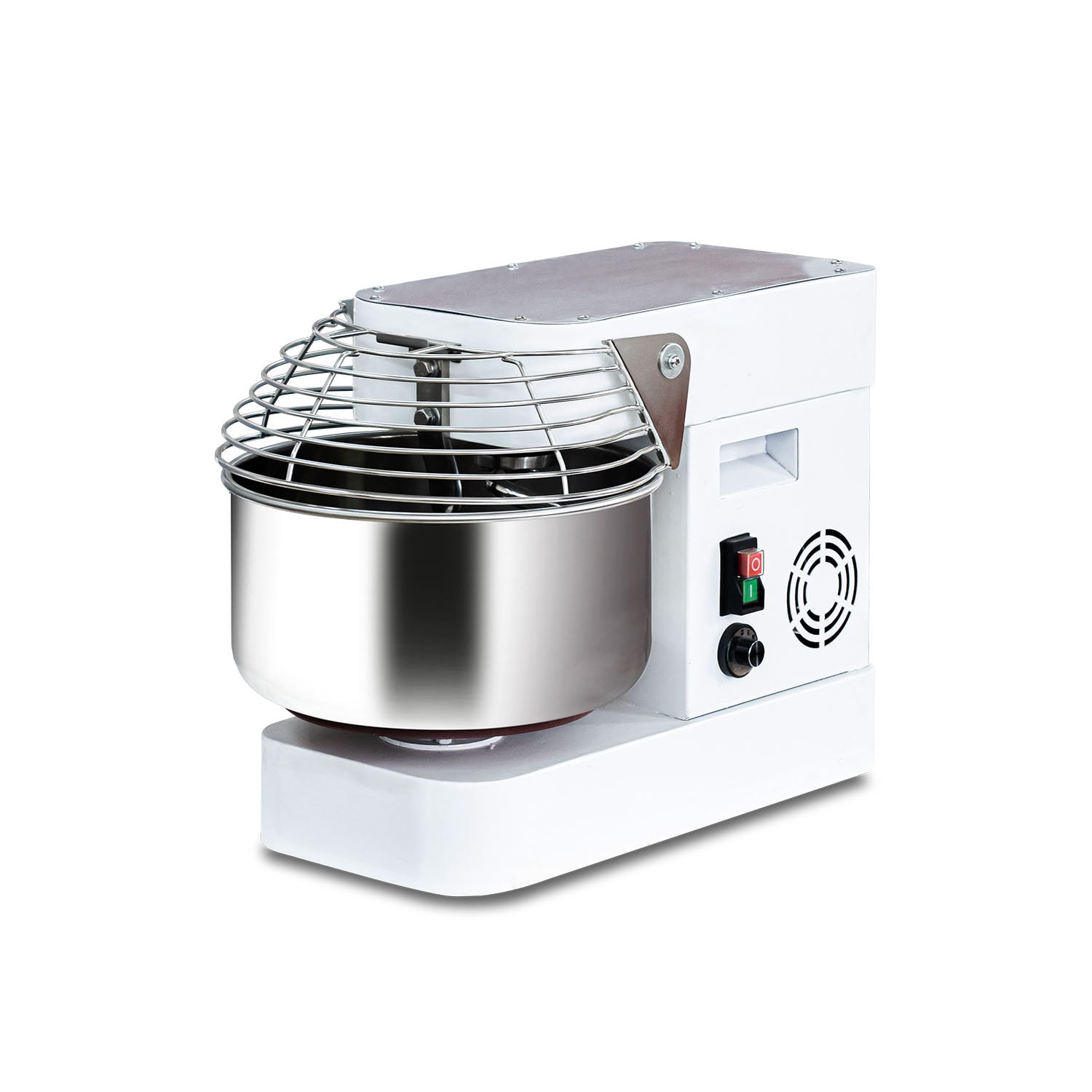
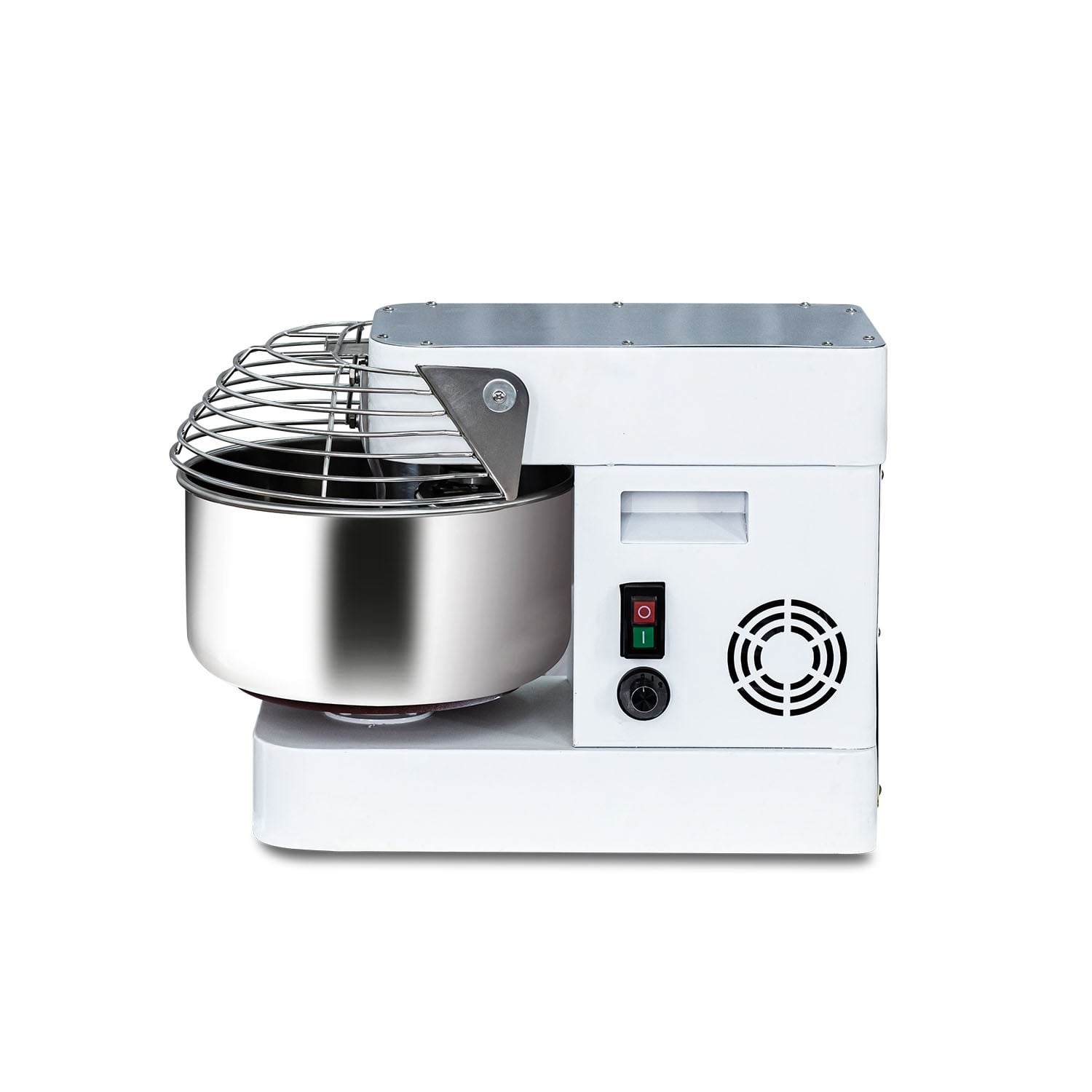
The HM10B Spiral Mixer is engineered for commercial environments requiring consistent dough production with specific hydration ratios. Unlike planetary mixers, the spiral design of the HM10B ensures that the hook and bowl rotate simultaneously, providing efficient gluten development without overheating the dough. This technical overview breaks down the HM10B’s internal configuration, electrical schematics, and operational limits to assist kitchen managers and maintenance personnel in optimizing equipment lifespan.
Technical Specifications
| Model | HM10B |
| Bowl Capacity | 10 Liter |
| Max Flour | 2.5 KG |
| Speed of Bowl | 8/16 RPM |
| Speed of Spiral | 90/184 RPM |
| Power | 550 W |
| Voltage | 220V~230V/50HZ |
| Size | 610x350x440 MM |
| Packing Size | 650x390x490 MM |
| Weight/Gross Weight | 30 KG/32.2 KG |
Operational Capacity and Duty Cycles
To prevent mechanical failure and ensure consistent product quality, operators must adhere to specific load and hydration constraints defined in the HM10B manual. Overloading the bowl or mixing low-hydration doughs can exceed the torque rating of the 550W motor.
Load and Hydration Guidelines
- Volume Occupancy: The paste/dough should occupy between 30% and 60% of the barrel capacity. Operating below 30% is inefficient, while exceeding 60% risks dough rising into the transmission housing.
- Hydration Ratio: The recommended flour-to-water quantity is 50% to 57%. This machine is optimized for medium-stiff doughs (e.g., traditional bread, pizza). Lower hydration ratios significantly increase resistance on the spiral hook axle.
- Duty Cycle: When the machine is loaded to capacity, continuous operation must not exceed 20 minutes. A cool-down period is required to protect the motor windings and capacitor.
More Details


Internal Mechanics and Transmission
The HM10B utilizes a hybrid transmission system involving belts, chains, and a gearbox to manage the differential speeds between the spiral hook and the bowl.
Transmission Components
According to the parts list (Figure 2 and Figure 4), the system includes:
- Primary Drive: A timing belt system (Big timing belt pulley Z=70, Small timing belt pulley Z=22) connects the motor to the main shaft. Belts are used here to reduce noise and provide a slip-point in case of severe jamming.
- Bowl Drive: The bowl rotation is driven by a chain system (Bowl’s chain, Big sprocket Z=60, Small sprocket Z=18). Chains provide the high torque necessary to rotate a full bowl of heavy dough.
- Gear Box: The gearbox houses the driving shaft and is sealed with an oil seal (25*40*8) and gasket. Regular inspection for oil leaks around the gear box cover is essential for preventative maintenance.
Electrical Configuration and Safety
The electrical diagram for the HM10B highlights a circuit designed for operator safety and motor protection. All maintenance involving these components requires a professional electrician.
Key Electrical Components
- K1 (Overload Protection Switch): Automatically cuts power if the motor draws excessive current, typically caused by dough that is too stiff (low hydration) or exceeding the 5kg capacity.
- K4 (Urgency Stop Switch): A hard-stop safety feature that immediately halts the AC contact device (KM), cutting power to the motor (M).
- K5 (Safety Switch): Linked to the safety net. The machine is prohibited from operating if the safety net is not in the closed position.
- Capacitors (CA, CB): The diagram indicates start/run capacitors, essential for single-phase motor operation.
Key Takeaways
The dough mixer HM10B is a precision instrument designed for specific operational windows. To maintain warranty compliance and operational efficiency:
- Strictly adhere to the 50-57% hydration ratio.
- Do not exceed 20 minutes of continuous runtime at full load.
- Ensure the safety net is fully engaged before initiating the start switch (K2).
- Disconnect total power after every use to prevent accidental activation.